Digital EducationOpenStatus: Approved and listedSample
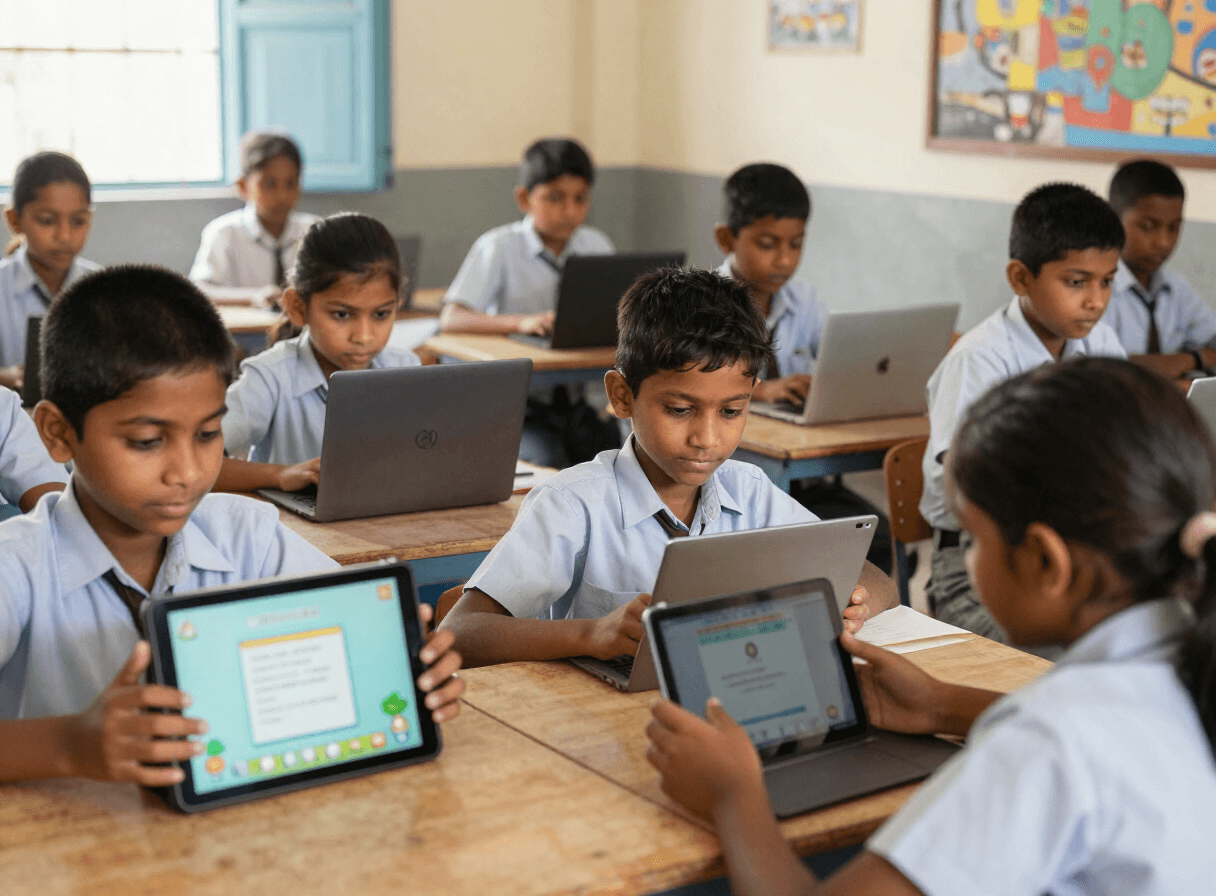
Smart Classrooms for 40 Government Schools
Muzaffarnagar district, Uttar Pradesh
Executive summary
Equip 40 government upper-primary schools with smart classrooms, train 160 teachers and track learning outcomes in mathematics and science over two academic years.
Problem statement
Most government schools in the district have no working digital teaching aids. Teachers have limited training in digital pedagogy and learning levels in mathematics are below state averages.
Proposed solution
Install one smart classroom per school with offline content aligned to the state curriculum, train two to four teachers per school, and provide two years of maintenance and in-school mentoring.
Objectives
- Install 40 smart classrooms with offline content
- Train 160 teachers in digital pedagogy
- Improve maths and science learning levels by 15% over baseline
Duration, timeline and milestones
24 months · 1 Apr 2027 – 31 Mar 2029
- Baseline assessment in all 40 schoolsDue 31 May 2027
- Installation completeDue 31 Aug 2027
- Teacher training cohort 1 and 2Due 31 Oct 2027
- Mid-line assessmentDue 31 Mar 2028
- Endline assessment and impact reportDue 31 Mar 2029
Expected outcomes
- 9,600 students learning with digital content each year
- 160 teachers certified in digital pedagogy
- Independent baseline and endline learning report
Sustainability plan
Schools sign a maintenance commitment; the education department is engaged from the start so smart classrooms are included in school development plans after year two.
Risks and mitigation
- Power supply interruptions — mitigated with inverter backup
- Teacher transfers — mitigated by training at least two teachers per school
SDG alignment
- SDG 4: Quality Education Quality Education
- SDG 10: Reduced Inequalities Reduced Inequalities
Gallery and videos
Real project photos with beneficiary consent replace these placeholders.